Videos
Curated collection of videos across various platforms, most recent first
80 videos available
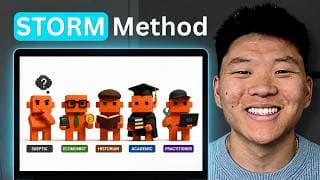
The Stanford STORM Method: How to Make Claude Research Like a PhD
The Stanford STORM method represents a significant leap forward in how users interact with Large Language Models like Claude to perform complex research. Instead of a single prompt, this video covers how to utilize a four phase agentic workflow that simulates five expert personas to generate verified, structured briefings. By moving away from the search box model, STORM allows users to produce high quality research that is twenty five percent more organized than standard methods while virtually ...
ClaudeStanford STORMAI Research+5
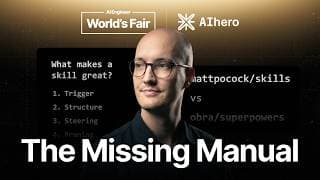
The Missing Manual: How to Architect High-Performance AI Skills
This video, titled The Missing Manual: How To Write Great Skills, features expert developer Matt Pocock explaining a systematic framework for building high quality instructions for AI agents. Pocock addresses the common problem of skill hell, where developers struggle to create reliable and efficient AI tools. He provides a four part checklist: Trigger, Structure, Steering, and Pruning. By focusing on these areas, developers can reduce context load, improve agent predictability, and create maint...
AI EngineeringPrompt EngineeringAI Agents+5
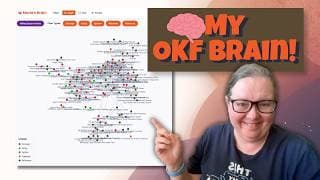
Building a Personal Knowledge Brain with Google's Open Knowledge Format (OKF)
This video covers the practical implementation of Google's Open Knowledge Format (OKF) to create a personal knowledge base or brain. Marie Haynes explains how to use this standardized directory of markdown files to organize information into concepts, entities, and playbooks that AI agents can easily understand and update. By adopting this structure, users can significantly boost their productivity by automating data ingestion and retrieval processes. The video provides a deep dive into the archi...
Open Knowledge FormatGoogle OKFArtificial Intelligence+5
Google's Open Knowledge Format: A New Era for AI Agents and SEO
This video covers the introduction and technical breakdown of Google's Open Knowledge Format (OKF), an open specification designed to standardize how business and personal knowledge is structured for AI agents. By utilizing Markdown files and YAML metadata, OKF creates a vendor-neutral way to represent concepts, context, and curated insights that modern AI systems need to function accurately. The discussion explores the technical requirements for Knowledge Bundles, the influence of Andrej Karpat...
Google SearchArtificial IntelligenceOpen Knowledge Format+5
Mastering Claude Code: Professional Strategies for Large Scale Codebases
The video provides a comprehensive guide on how to make Claude Code work efficiently in large, complex repositories by building a robust AI Layer. This AI Layer serves as the harness of configuration, context, and tooling that enables an AI agent to navigate codebases spanning hundreds of thousands or even millions of lines. Instead of relying on the model alone, this approach uses a combination of hierarchical rule files (CLAUDE.md), automated session hooks, and specialized search tools like La...
Claude CodeAnthropicAI Development+5
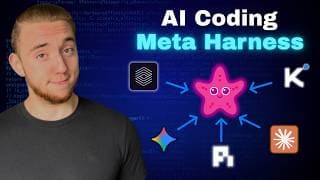
Mastering Multi-Agent Workflows with Omnigent Open-Source Meta-Harness
This video provides an in-depth look at Omnigent, an open-source meta-harness designed to orchestrate and combine multiple AI agents into powerful, unified workflows. Viewers will learn about the importance of meta-harnesses in the evolving landscape of AI-assisted coding, how to install the tool with a single command, and how to utilize built-in orchestrators like Polly and Debby. The video also covers advanced features such as human-in-the-loop policies and cross-device collaboration. ## Key T...
AI AgentsOpen SourceCoding Tools+5
Omnigent AI: GitHub Repository and Framework Overview
This video covers the fundamental aspects of the Omnigent AI framework as presented in its official GitHub repository documentation and related media. It serves as an introduction for developers interested in building robust, scalable AI agents using open-source tools. Because this analysis is based on external platform metadata, it is essential to treat this as a guide for manual verification. \n\n## Key Takeaways\n* Omnigent focuses on the orchestration of intelligent agents.\n* The framework ...
othervideoAI Agents+4
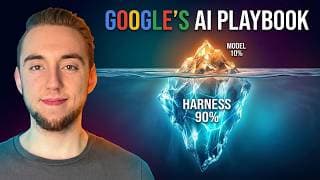
Google's New AI SDLC: From Vibe Coding to Agentic Engineering
This video provides a deep dive into Google's masterclass on the New Software Development Life Cycle (SDLC) with Vibe Coding and Agentic Engineering. It covers the shift from traditional manual coding to AI driven systems where the focus moves from implementation to requirement specification and automated validation. Viewers will learn how to build a robust harness that allows AI agents to function as high performance software producers within a professional factory model. ## Key Takeaways * Th...
AI SDLCAgentic EngineeringVibe Coding+5
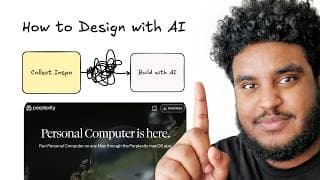
The Ultimate AI Design Workflow for Developer Consistency
The video covers a comprehensive AI design workflow designed to help developers create professional, consistent user interfaces without needing a full design team. It specifically details how to use Claude Design and Claude Code to transform inspiration into a functional web application using SvelteKit, centered around the foundational concepts of design systems and design tokens. By following this method, developers can avoid the fragmented look often associated with AI generated code and inste...
AI DevelopmentDesign WorkflowClaude Design+4
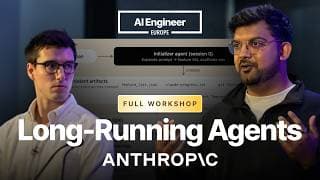
Building Long-Running AI Agents: Harness Design and the Claude Evolution
This video provides an in-depth exploration of how to build AI agents capable of running for several hours without losing focus or coherence. Presented by engineers from Anthropic, the talk covers the transition from basic model prompting to sophisticated multi-agent harness designs that utilize a Planner-Generator-Evaluator loop. Viewers will learn about the history of the Claude model series and the specific engineering techniques used to overcome context rot, planning failures, and self-evalu...
AI AgentsAnthropicClaude+4
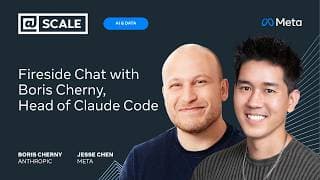
The Future of AI-Driven Software Engineering: Agents, Loops, and ROI
The video features a deep dive fireside chat between Meta's Jesse Chen and Anthropic's Boris Cherny regarding the current state and future trajectory of AI in software engineering. They discuss the transition from using AI as a simple assistant to employing autonomous agents and loops that can handle complex end to end tasks like code maintenance, security patching, and even project management. The discussion specifically covers the evolution of Claude models, the launch of Claude Code, and the ...
Artificial IntelligenceSoftware EngineeringClaude AI+5